
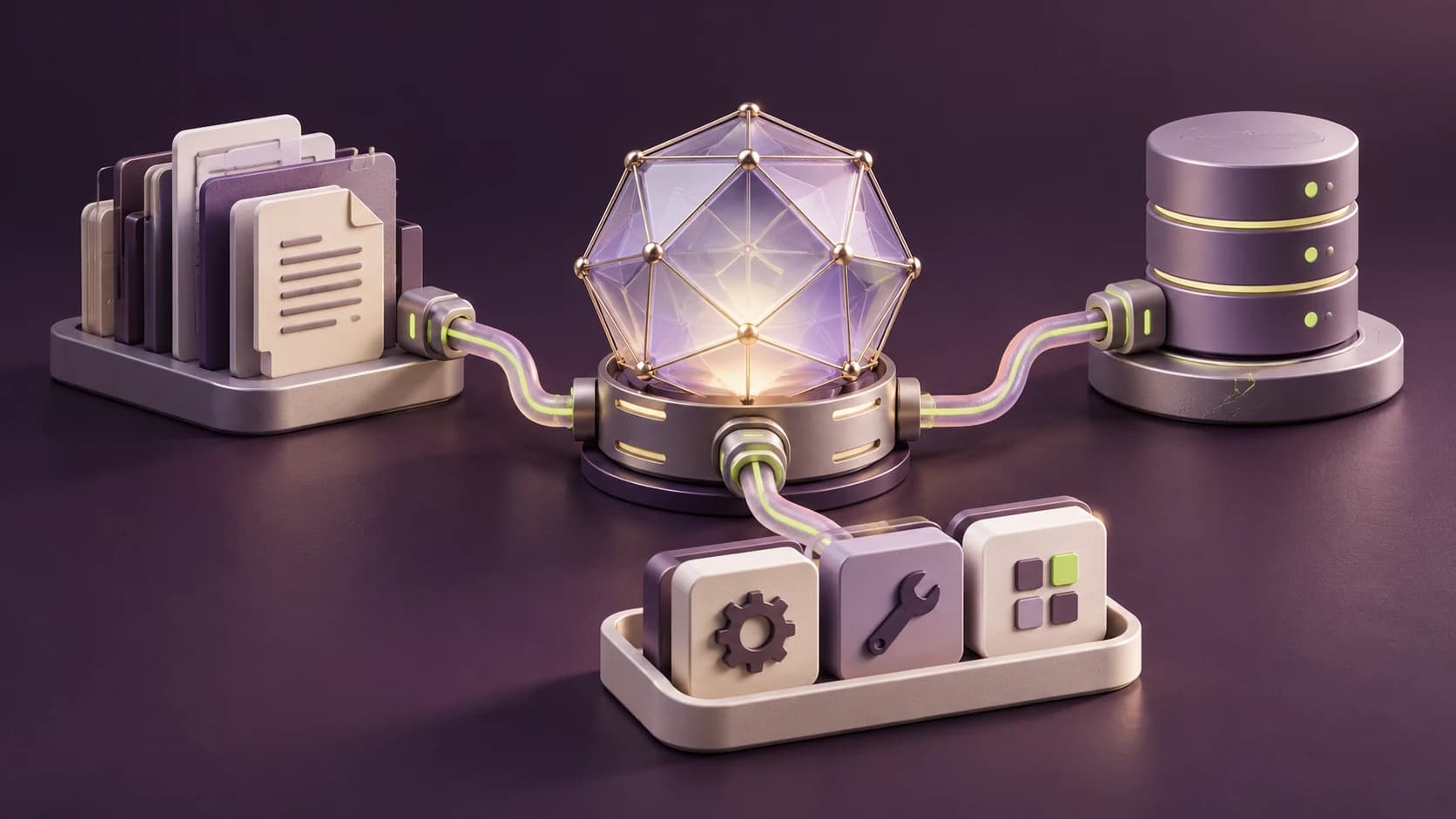
The New Standard in AI Systems: What is Model Context Protocol (MCP) and How Does It Work?
Announced as an open standard by Anthropic, Model Context Protocol (MCP) revolutionizes how AI models interface with local filesystems, internal APIs, and enterprise databases.
The Integration Bottleneck in AI Development
Before Model Context Protocol (MCP), connecting an AI model to external tools was a chaotic mess. If you wanted Claude or GPT to query an Oracle database, access a Git repository, and search Slack messages, developers had to write bespoke custom connectors for every single tool and model provider.
MCP replaces this fragmented ecosystem with a clean, standardized, open architecture—analogous to how USB-C unified physical hardware cables.
How MCP Architecture Works
MCP utilizes a lightweight client-server model:
- MCP Host (Client): The AI application or IDE (such as Claude Desktop, Cursor, or your custom enterprise assistant).
- MCP Server: A lightweight adapter that exposes resources, tools, and prompts from a specific system (e.g., PostgreSQL Server, GitHub Server, File System Server).
- Protocol Transport: Communication takes place over standard
stdio(standard input/output) or HTTP with Server-Sent Events (SSE).
Why MCP Matters for Enterprises
- Plug-and-Play Extensibility: Once an MCP server is written for your internal ERP or database, ANY MCP-compatible AI agent can securely connect to it without rewriting integration code.
- Fine-Grained Security: MCP servers strictly define which functions an AI agent can execute (read-only queries vs. write actions), preventing unintended system modifications.
- Decoupled Architecture: You can switch your underlying LLM provider from Anthropic to OpenAI or a private local model without touching your tool integration layer.