
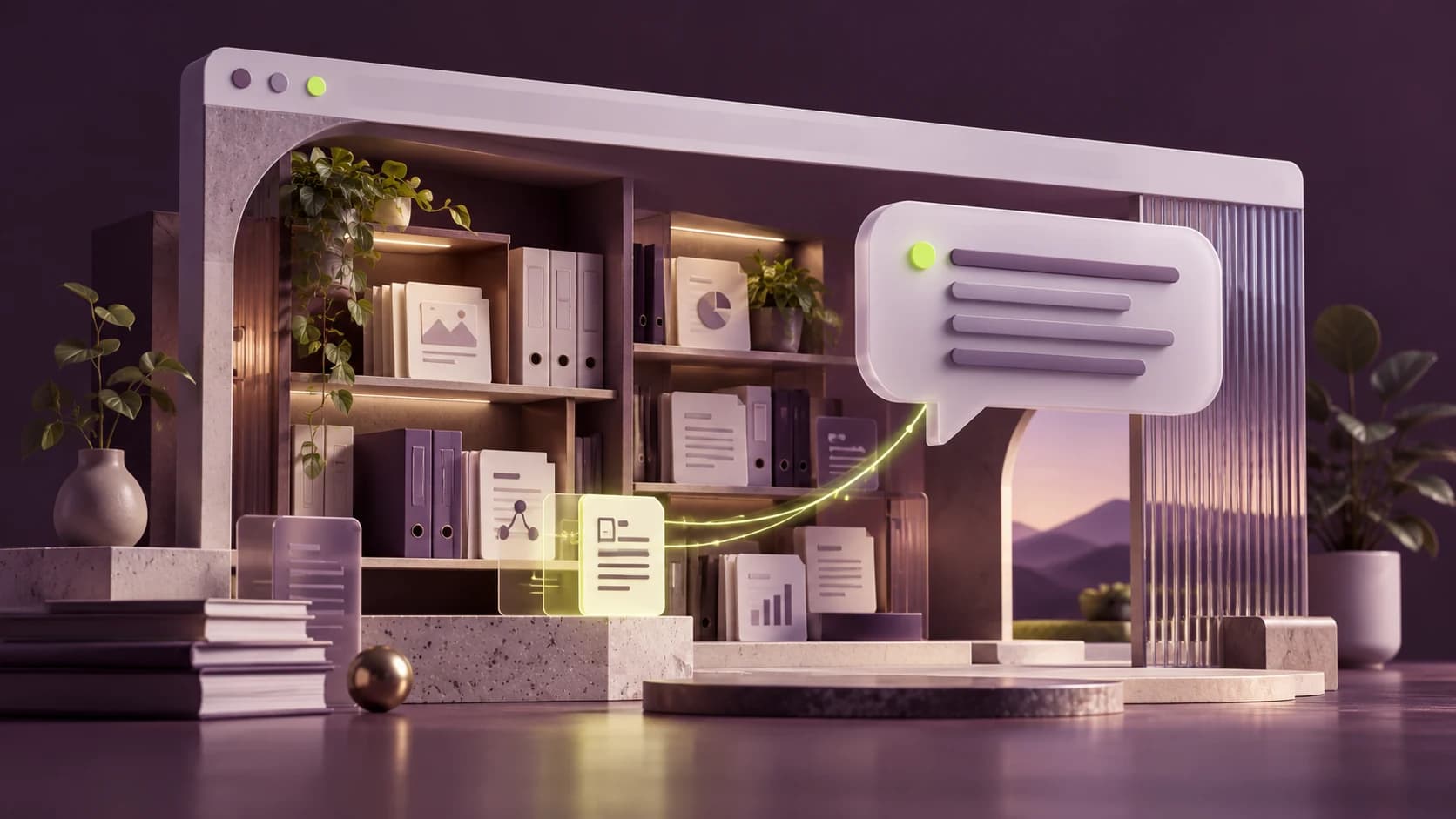
Building Future-Ready Platforms: Use Cases & Architecture of AI-Powered Websites
Websites that engage visitors conversationally, retrieve facts from corporate knowledge bases via RAG, and serve as 24/7 digital concierge: sectoral use cases and architectural best practices.
The Death of the Static Brochure Website
For over two decades, corporate websites followed the same passive formula: a homepage, an 'About Us' section, static service cards, and an email contact form. Visitors were forced to scroll, click, and guess where the answers to their questions were located.
In 2026, web experiences are becoming conversational, contextual, and intelligent. An AI-powered website functions as a 24/7 senior sales consultant who welcomes every visitor, understands their unique needs, and provides verified, tailored guidance.
Core Architecture: The RAG Triad
Modern AI websites rely on Retrieval-Augmented Generation (RAG):
- Enterprise Knowledge Ingestion: Documents, pricing sheets, product catalogs, and service terms are parsed, chunked, and stored in a vector database.
- Semantic Search & Retrieval: When a visitor asks a question, the system retrieves only the verified matching facts from the company repository.
- Grounded Generation: The LLM synthesizes an articulate, polite answer derived exclusively from the retrieved facts, eliminating AI hallucinations.
Sectoral Use Cases
- Healthcare & Wellness: Guiding patients to appropriate specialists, detailing preparation steps for clinical tests, and taking appointment bookings.
- Real Estate & Property: Qualifying buyers, presenting matching property portfolios based on budget and location, and scheduling private viewings.
- B2B SaaS: Explaining technical API limits, assisting developers with sample integration snippets, and qualifying high-value enterprise leads.
Sardunya Yazılım engineers custom AI web platforms built on Next.js with sub-second response times and rock-solid brand voice consistency.